
One choice you make that will probably influence the look and feel of your home for many years to come is the choice of wood you will use for your doors. Indian households traditionally consider three wood types, they are teak, pine, and sal. All of them have advantages and it really depends upon where your door is, the amount of maintenance you are prepared to carry out, and your budget.
Here is a clear breakdown of all three.
Teak Wood: The Long-Standing Choice for Indian Homes
Teak has been the preferred wood for wooden doors in India for generations, and the reasons hold up well even today.
Why homeowners choose teak:
- Naturally rich in oils that repel moisture, making it highly weather-resistant
- Exceptional strength that holds up to daily wear without warping
- Works beautifully for wooden main door designs in Indian style, from carved panels to modern flush surfaces
- Requires minimal maintenance compared to most hardwoods
- Long lifespan that makes the upfront cost worth it over time
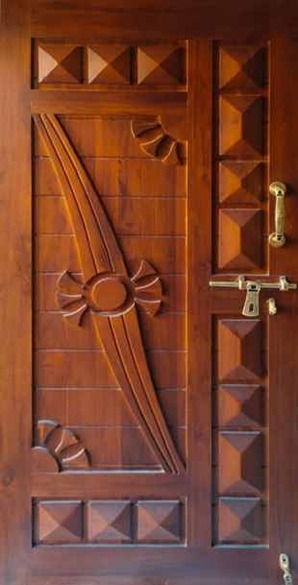
Teak works best for main entrance doors because it can handle all external factors, such as heat and rain. If you are considering modern Indian house main door designs, teak provides the grain pattern and stability needed for intricate and contemporary carvings.
The only issue is the price of the wood. Teak wood is a luxury hardwood and accordingly the price of quality teak doors will be significantly higher. For buyers who want long-term durability without the need for regular maintenance, investing in this is worth it.
Pine Wood: A Practical Choice for Interior Spaces
Pine is a softwood, which means it is lighter, easier to work with, and considerably more affordable than teak or sal. That makes it a popular choice among pine door manufacturers for interior applications.
What pine does well:
- Lightweight and easy to install, especially for interior rooms
- Takes paint and finishes cleanly, giving homeowners flexibility with color
- Suitable for flush door designs that prioritize clean, modern lines
- Budget-friendly without compromising on basic functionality for indoor use
The best applications for pine would be bedroom doors, bathroom doors, and internal room dividers that will not be affected by any weather elements. Pine wood flush doors can look sophisticated and modern in a well-finished interior while costing a fraction of what hardwood doors cost.
Placement plays a key role. Pine performs well in controlled indoor environments. For areas exposed to humidity or direct weather contact, a denser wood holds up better.
Sal Wood: Dense, Dependable, and Often Overlooked
Sal (Shorea robusta) is native to the Indian subcontinent and has a long history in construction. It is one of the denser hardwoods available in India, which makes it naturally resistant to termites and general wear.
Sal wood strengths:
- High density means strong resistance to boring insects, including termites
- Performs well in door frames, where structural integrity matters most
- Good dimensional stability, meaning it resists swelling and shrinkage in humid conditions
- A reliable mid-range option between the premium pricing of teak and the softness of pine
Door frames are an example where the durability of sal wood can be used very practically. Screws and hinges hold very well into the wood and because of the natural durability of sal, the frames last for many years even in humid or coastal conditions. This is the reason why across the state of Gujarat, as well as other states in India sal wood is used locally.
Which Wood Should You Choose?
- Main entrance door exposed to weather: Teak is the strongest performer here.
- Interior doors for bedrooms, bathrooms, or offices: Pine is practical and budget-friendly.
- Door frames and structural elements: Sal offers strong, termite-resistant performance.
Many homeowners blend all three: Teak is often used for the front door and all prominent outside openings, Pine for the flush interiors, and Sal for all framing. This ensures you get durability where it counts without unnecessary expense.
Here at Maa Santoshi Furniture Industries Pvt. Ltd., we manufacture doors using all three wood types and advise homeowners and builders on which is the most appropriate type depending on weather, function and design requirements.
Frequently Asked Questions
1. What makes sal wood a good option for door frames?
Sal has good density and termite resistance, it is also dimensionally stable, making it a much better option for door frames, where the frame would need to secure the hardware in place without the frame movement associated with the fluctuations in seasonal humidity.
2. Which wood is better for bedroom doors?
Pine is a practical option for bedroom doors as they are light in weight, easy to finish in multiple colours and styles.
3. Do wooden doors require a lot of maintenance?
Wood maintenance mainly depends on the type of wood and the location of the door. Teak needs the minimum amount of maintenance due to the presence of natural oils. Pine and Sal will require regular re-finishing and re-sealing if exposed to changing humidity. The fact that a door is installed and properly sealed upon arrival at the site also considerably reduces maintenance after installation.
Conclusion
Choosing the correct wood for your doors is a decision that pays off for generations. Teak provides an excellent durability and long-term value. Sal offers durable options in mid-range for frames and interior use. Pine works well for affordable interior doors that are not exposed to weather conditions. The final decision should be made based on the placement, what conditions it will face, and how much you’re willing to invest in maintenance.
Maa Santoshi Furniture Industries Pvt. Ltd. is a trusted manufacturer and supplier of solid teak wood doors, door frames, and customized wooden solutions for doors and frames. All of our ISO certified products offer a touch of fine craftsmanship & lasting quality any home needs, whether built from scratch or renovated. Visit msfipl.com to explore our full range of wooden door solutions.